
O&H Danish Bakery, Charlie's Smokehouse
Season 16 Episode 13 | 26m 47sVideo has Closed Captions
Luke and Kurt Fogle go behind the counter at Racine's O&H Danish Bakery to make kringle.
Luke joins Kurt Fogle – a Racine-based chef who got his start at O&H Danish Bakery – to hand-fill and shape Wisconsin's state pastry from 18-layer Danish dough. Then he heads to Gills Rock at the northern tip of Door County, where Charlie's Smokehouse has brined and maple-smoked Lake Michigan whitefish using the same methods since 1932.
Problems playing video? | Closed Captioning Feedback
Problems playing video? | Closed Captioning Feedback
Wisconsin Foodie is a local public television program presented by PBS Wisconsin
O&H Danish Bakery, Charlie's Smokehouse
Season 16 Episode 13 | 26m 47sVideo has Closed Captions
Luke joins Kurt Fogle – a Racine-based chef who got his start at O&H Danish Bakery – to hand-fill and shape Wisconsin's state pastry from 18-layer Danish dough. Then he heads to Gills Rock at the northern tip of Door County, where Charlie's Smokehouse has brined and maple-smoked Lake Michigan whitefish using the same methods since 1932.
Problems playing video? | Closed Captioning Feedback
Where to Watch Wisconsin Foodie
Wisconsin Foodie is available to stream on pbs.org and the PBS app.
Providing Support for PBS.org
Learn Moreabout PBS online sponsorship- Luke Zahm: This week on Wisconsin Foodie: Kringle is the state pastry of Wisconsin, and for those who know, O&H is kind of where it's at.
- Kurt Fogle: Whoa!
- Luke: Oh, my gosh.
I think this is the biggest bakery I've ever seen.
This is where the magic happens.
So, just for clarification, you're telling me that this, all of these layers, over a three-day process, get reduced down to that.
- Wade Nelson: Exactly.
- Luke: It's almost the exact same action as milking a cow.
Cheers.
- Delicious.
- Luke: Thank you, brother.
- Wade: Oh, thank you.
- Chris Voight: So, my grandpa started smoking fish here in 1932.
- Has the process changed a lot since your grandpa started it?
- Chris: No, no, no, no.
So, he brined his fish in salt water brine.
- Luke: Okay.
- Chris: Brined 'em overnight prior to the smoking, and then put 'em on the racks, put them in the smokehouse, light two fires underneath.
And this process is the same.
- Luke: I just feel so honored and privileged to get to have the opportunity to take all this in and drink up the best that Wisconsin has to offer.
Wisconsin Foodie would like to thank the following underwriters.
[gentle music] - Did you know Organic Valley protects over 400,000 acres of organic farmland?
So, are we an organic food cooperative that protects land, or land conservationists who make delicious food?
Yes, yes, we are.
Organic Valley.
- Other sausage makers use the AI-generated voice of their namesake and founder.
Our products are finely crafted, made from time-honored recipes with ingredients you can actually pronounce.
Jones: Making breakfast better since 1889.
- The Wisconsin potato and vegetable growers are proud underwriters of Wisconsin Foodie.
It takes love of the land and generations of farming know-how to nurture a quality potato crop.
Ask any potato farmer and they'll tell you, there's a lot of satisfaction in healthy-grown crops.
- Employee-owned New Glarus Brewing Company has been brewing and bottling beer for their friends, only in Wisconsin, since 1993.
Just a short drive from Madison, come visit Swissconsin and see where your beer's made.
- With additional support coming from The Conscious Carnivore.
From local animal sourcing to on-site, high quality butchering and packaging, The Conscious Carnivore can ensure organically raised, grass-fed, and healthy meats through its small group of local farmers.
The Conscious Carnivore: Know your farmer, love your butcher.
Also, with the support of the Friends of PBS Wisconsin.
[upbeat music] We are a collection of the finest farmers, food producers, and chefs on the planet.
We are a merging of cultures and ideas, shaped by this land.
[brats sizzle] We are a gathering of the waters, and together, we shape a new identity to carry us into the future.
[glasses clink] We are storytellers.
We are Wisconsin Foodie.
[bright music] This man standing next to me is none other than Kurt Fogle.
Kurt, a native resident of Racine, cut his teeth right here at... - O&H Danish Bakery.
- Luke: Kringle is the state pastry of Wisconsin.
- Kurt: Sure is.
- Luke: And for those who know, O&H is kind of where it's at.
So, today, we get a chance to walk behind the scenes, see where Kurt got his start, and learn more about this delicious, scrumptious treat.
- I'm just gonna eat it all.
- Really?
- Yeah.
- That's the jam?
- I don't care if I learn anything.
- I love it, I love it.
I'm with you.
Let's go check it out.
- All right.
- Now walk.
[laughs] - Whoa!
- Luke: Oh, my gosh.
I think this is the biggest bakery I've ever seen.
- Luke: This is where the magic happens.
Wade, what do we have in front of us?
- Wade: So, we have everything we need here to make our famous Wisconsin Kringle, which is cream cheese filling, cranberries and cherry filling mixed together.
And then, our Danish dough.
And we have a piece of this laminated dough as an example of how this form starts.
It's a three-day process.
So, this is a first-day lamination.
And you can see there's 18 layers of butter laminated to that dough.
- Well, you're talking about 18 layers.
Is that, like, industry standard?
- Everybody has their own standards, multiple ways of laminating dough, but this is the way our standard is, bake to 18 layers.
- In order for it to be a Danish, it has to have a certain amount of layers.
- Okay.
- And for anything that we could say, like I was trained by the French, but we're at a Danish bakery now, so when it comes to Danish, we're taking Wade's word for it.
- Luke: So, we have this heavily laminated dough.
It's a three-day process.
- Wade: Yes.
- Luke: Do you do all 18 layers on the first day?
- Wade: Yeah, so it starts in the mixing and then laminating the first layers in, or laminating those layers in.
And then, we sheet it down to a smaller, thinner block.
And then, that final day, we sheet it down to less than two millimeters thick.
[gentle music] - Luke: So, just for clarification, you're telling me that this, all of these layers, over a three-day process, get reduced down to that?
- Exactly.
- Luke: This is our starting kringle dough.
- Wade: Yep.
- Luke: Okay.
Walk us through the magic, Wade.
- So, I'm gonna start with hand filling the cream cheese as a base filling.
- Luke: Okay.
- Yep.
You want to cup your hand and then kind of let it ride out the bottom of your palm like that.
- I'll go first to show you the standard, which probably would never make the cut here at O&H.
So, I'm gonna come in with a cup, right?
- Wade: Yeah.
- Okay, here we go.
I'm gonna start here.
It's almost the exact same action as milking a cow.
Oh, no.
- Wade: Pretty good.
It's a little heavy.
It's better to treat 'em than short 'em, right?
- Kurt: A couple more hours, we can have one.
- Right here.
Shut up, Kurt!
[laughter] Now, let's see Kurt here.
[groovy music] - Oh, I did worse than Luke.
- Wade: You're gonna need more cheese, Kurt.
- Wow!
- Luke: You got a real gentle touch there, Kurt.
[laughs] - That's-- I thought I would have it no problem.
- Luke: Okay, so we've got the cream cheese filling down.
More or less.
- More or less.
- Yeah, I think mine was more.
Yours might have been a little less.
- Yeah.
- And now we're going in with the cranberry and cherry mixture?
- Yep.
- Luke: Okay.
- So, I place it in the center of the cream cheese and then kind of squeeze the pastry bag and deposit right down the middle.
- Kurt: Okay, you see he's piping it right into the filling, not on top of it.
- Luke: Right, so it's pushing it up on the sides.
- All right, here we go.
- Oh, that's good.
That is good technique.
What do you think, Wade?
- Wade: He's hired.
He's that good.
- Kurt: Oh.
- Luke: Oh, you're really pushing that one in there.
I like that.
- Kurt: It's got a little bit more to give.
- Oh, here goes nothing.
[groovy music] How did I do, Wade?
Is that okay, or is that too much?
- Wade: No, it's perfect.
- That's perfect?
That looks a little heavy to me, Wade.
[Luke laughs] - Again, better to give it more than less, right?
- More than less, I like that.
- The first fold, you wanna cover the fruit.
- Yeah.
- Towards you?
- Yep, towards you is the best.
And then, I'll fold it over, fold it over, and just kind of settle it in like that.
And then, I'm ready for the second fold.
Second fold, bring the dough up, and you kind of press it down like that.
- Luke: Okay, a little smush.
Is that a baking term?
- Kurt: No.
- Luke: Smush?
- Wade: That's a skilled flip right there.
- Luke: Aye.
[chants] Fo-gle, Fo...!
All of Racine is watching you right now.
The native son, Kurt Fogle, takes his place at the kringle dough shaping bench.
- Kurt: I was born to do this.
[Luke laughs] - Luke: Yeah!
- Okay?
- Racine's own Kurt Fogle.
[laughs] - So, when you pan the kringle, you want the seam to be on the outside.
- Luke: Okay.
- Wade: I'm gonna do a reverse grip right here and flip it over that way.
- Luke: So, that seam goes on the outside.
- Yeah.
- Luke: Aha.
- Making the oval shape.
- That was a very-- - Seam at about two inches.
Then, this first fold over, and then this one over the top of that and tuck it under just a little bit.
And you press down on the seam.
And then, you can make that final oval shape.
- Luke: Why is the oval important?
- You know, it originally was a pretzel, but I think, in the pretzel shape, you had a lot more intersections in-- - Luke: Yep.
- And the pastry is much heavier on the cross-section, and some of the people always go for the side cuts without the cross.
- Luke: Yeah.
- So, we thought the oval would have a better cut.
- I bet you that the overlap of the pretzel, it was kind of doughy, too, like, maybe underbaked.
- Yeah, sure, it didn't bake as much.
You know, the seam was never the preferred.
Nobody really prefers the seam.
Everybody goes where the fruit is, right?
- Sure.
- They were also saying back then, like, everything doesn't have to be a pretzel shape, right?
They don't have to make-- - There was an anti-pretzel-shaped movement.
- Everything was a pretzel, everything was a pretzel.
- Luke: One of the things that becomes immediately apparent standing here with Wade in O&H is there is such a high level of artisan mastery on display all the way around us.
It is impossible to not engage with this process and find out, at the end of it, that it is actually deceptively hard.
I'm never going to look at a kringle the same way ever again after this experience today, because this is definitely an artisan's touch.
The hand of mastery.
- Kurt: Yeah, we say rustic.
- Luke: Rustic, yeah, it's-- - Kurt: What does rustic mean?
It means it looks bad.
[Luke laughs] - Luke: So, now we put these to sleep for a little bit, and we're gonna bake 'em off.
Right, we get to follow this start to finish.
- Kurt: This oven is named Hansel.
- Luke: Hansel.
[laughs] - Kurt: And this oven is named Gretel.
[imitates German accent] All the children love it.
- Luke: Besides eating it, this is kind of like the penultimate moment of kringle making, correct?
We're gonna finish these guys off?
- Yeah, so it's time.
They're cooled down to ambient.
Now, we're gonna put the icing application on it.
So, here we go.
- All right, you show us.
- All right.
- Luke: Lead the way.
I see a-- Okay.
- So, it's again the same technique as you did with the cream cheese filling.
- Yeah, yeah, yeah.
- Where you cup it.
But obviously, a little bit less.
It's gonna run a little bit more 'cause it's warm.
- So, you're not just like, ah... This is not... - Wade: No.
- Luke: This is a more of an exacting science.
- Wade: Yeah.
There's other ways of doing it.
I think you probably were taught maybe going like this.
- Kurt: Yep.
- Wade: Yep.
We'll let Kurt show off his technique.
Might be better than my technique.
- No, I'm not gonna say that about anything finger related.
- Luke: Here we go.
Let's see it, Fogle.
Deep breath.
- Whoa!
Okay, I didn't expect it to be warm.
It's more like this.
- Wade: Yeah, there you go.
- Luke: That's more of a caress.
- I was trying to blend both of ours.
But I always remember, like, the ones that we would ice almost seem to have, like, three lines going through them.
- Luke: Okay, got it.
- Wade: Let that-- Let it ride.
Don't forget, let it ride.
- Luke: Let it ride?
- Wade: Let it ride.
- Luke: ♪ Ride, ride, ride, lettin' it ride ♪ ♪ Lettin' it ride ♪ Wait, I think he thinks it's a cherry cheese kringle.
- I don't know, it's pretty impressive.
- I don't know about impressive, but... - No, it looks good.
- Luke: I feel like I've waited almost too long now to enjoy this beautiful concoction.
[upbeat music] In my hand, I have 36 layers of love.
That's 18 on each side, and I feel like I know my neighbors, I know the people of Wisconsin, and I know our culinary traditions a little bit better today.
Thank you so much, gentlemen.
- Stuffed full of great Wisconsin ingredients.
- Can't beat that.
- Cheers.
- Cheers.
- Delicious.
- Thank you, brother.
- Thank you.
- Keep up the great work.
- Appreciate you guys.
- Pleasure, Wade.
- Appreciate it.
- I'm humbled.
[gentle music] When talking about iconic Wisconsin products, smoked whitefish has graced our tables for generations.
We're in Gills Rock at the northern tip of Door County to explore a food that was born out of necessity... Hey, I'm looking for Chris.
...but has transitioned into a much sought-after delight.
Okay, awesome.
By the smoke plume?
Today, we're at Charlie's Smokehouse.
I think that's hysterical.
Chris, the maestro.
It's good to meet you, my man.
- Nice to meet you, yeah.
- Thanks, thanks for having us out.
- Chris: Yeah.
- Luke: Tell me a little bit about Charlie's Smokehouse, would you?
What's the history?
- Chris: Sure.
So, my grandpa started smoking fish here in 1932.
He was down on the dock in a little, little building.
The front half of the building was a fish store.
The back half was where they weighed up the day's commercial catch.
He processed his fish back there, and he had a little outside smokehouse, similar to this one here that he smoked fish in.
And so, from '32 to '86, '87, I think it was.
And then, we outgrew that facility and built this one here.
So, we've got two smokehouses inside.
We've got one smokehouse outside here, and we've been doing it ever since.
- Luke: Has the process changed a lot since your grandpa started it?
- No, no, no.
So, he bribed his fish in salt water brine.
- Luke: Okay.
- Brined 'em overnight prior to the smoking and then put 'em on the racks, put 'em in the smokehouse, light two fires underneath.
And this process is the same.
- Luke: Does the wood composition change for the smoke, or do you... I mean, I guess I'm curious.
Do you have a-- You got a wood guy?
- Chris: Yeah, yeah, well, a lot of it's us.
We have a wood guy that gets us the wood.
Then we split it to the size we want.
Stack it up, dry it.
- Luke: Sure.
- Chris: But it's always maple.
Grandpa used maple.
That's-- We always use maple.
- Luke: That's incredible.
- Chris: Yeah, yeah.
- Luke: And maples are pretty abundant here.
- Chris: Abundant here, burn at the right rate.
Just that single-flavored smoke.
I think it's always consistent.
It's always, you know, unique.
- Luke: This is truly amazing.
I mean, like, I don't know if people can really understand the context of, like, the creosote and, like, all that beautiful, delicious smoke essence on the outside.
But, man, after tasting the smoked whitefish, like, you understand that these are definitely artisan masters.
You know, not to give you too big of a head, but, like, it was good smoked fish, man.
- Chris: Well, good, I'm glad.
- Luke: Yeah, yeah, yeah, yeah.
- Chris: Yeah.
- Luke: Talk to me a little bit about the health of the fisheries here off of Door County.
- Chris: Yeah, the whitefish is a well-managed fishery.
Commercial fishery.
The fishermen have individual quotas that they can catch, and the whitefish are doing quite well.
- Luke: Sure.
- Chris: Seasonally, where they fish 'em kind of changes.
Now, the fish are populous in the southern part of the bay.
- Luke: Okay.
- Chris: Earlier in the spring, they're in the northern part of the bay.
And in the fall, they'll be in the lake, 'cause that's where they do their spawning.
- Luke: Okay.
- Chris: So, yeah.
- Luke: How well do you feel like you know and understand the waters of Green Bay and Lake Michigan, adjacent to where we're at right now?
- Chris: Oh, just growing up here.
- Luke: Yeah, yeah, yeah.
- Chris: This is home.
I know it pretty well, yeah.
- Luke: This is your place.
- Chris: Yeah, yeah, exactly.
- Did you ever leave the peninsula?
- Just to go to college.
- Okay.
- Yep, went away.
Got my business degree at college.
But I always knew I was coming back here, so... Yeah, so I've been doing this full time for about 30 years.
- Luke: Oh, my gosh.
- Chris: But, you know, growing up in it, it seems like I've done it my whole life.
- Luke: Yeah.
How many pounds a week do you think you smoke right now?
I mean, if you had to guess.
- Chris: Maybe about 2,000 pounds of-- That's fresh weight, you know, and then you cut 'em and they lose some.
But, yeah, I would say, like, the fresh fish we're bringing in, probably about 2,000 pounds.
- Luke: Wow.
Has the demand for smoked fish changed in the 30 years you've been doing this?
- Chris: I don't think so.
I mean, I think it's popular.
- Luke: Sure.
- Chris: I think, when my grandpa started, they were smoking chubs, these little-- - Luke: Yeah.
- Chris: I don't know if you remember those.
- Luke: Yeah, yeah.
- Chris: Very good.
That was basically-- You smoked 'em.
That was it, the only use for that fish.
- Luke: Sure.
- But it was a fat little fish.
Very mild, nice tasting.
I think people bought 'em for the economic reasons.
They were cheap.
- Luke: Yep, yep.
- Cheap food back in his day, you know.
But I think nowadays, it's more food people.
- Luke: Sure, right.
- Chris: And they love trying new stuff, you know.
And so, I think the younger, if you wanna say, younger generation is taking on to just exploring new food things.
You know, and this is a new food thing for a lot of people.
- Luke: Isn't that crazy?
Like, things that were old become new again.
It's like this huge cycle.
- Chris: Yeah.
- Luke: Do you have a favorite way to eat it?
I mean, obviously I can imagine, from a smokehouse perspective, like, I take it off the bone, I eat it, I put it on a cracker, whatever.
But, like, is there anything like, you know, surprising that you like to do with that smoked whitefish?
- My mom used to make, like, a creamed smoked fish.
- Luke: Yeah!
- She'd serve it on, like, a English muffin.
Toasted English muffin, very good.
- Luke: Nice.
- Chris: My wife makes a wonderful whitefish spread with it with cream cheese and some spices.
- Luke: Sure.
- That I can-- I start, and then it's all gone.
You know, that's very addictive, actually, yeah.
- Just Chris hammering it.
You put cream cheese in it, you really can't go wrong.
Right?
- Yeah, yeah.
You got the cream cheese, you got the smokey.
It's perfect.
- Yeah, that's pretty much my love language right there, man.
That's great, that's great.
Well, Chris, how long do we have before the whitefish is ready to come out?
- Chris: So, we're gonna check on 'em here very shortly.
- Luke: Okay.
- Chris: And just-- They're probably gonna have a little bit of color on 'em.
They're not gonna be done yet.
But yeah, we'll get a good look at 'em.
[gentle acoustic music] - Luke: So, this is the Lake Michigan whitefish, right?
- Chris: Yep.
- Luke: Tell me about, I guess, how does this come into, you know, your area of mastery.
What does it look like when it comes through the door?
- Sure, so we receive 'em from a fisherman.
These are trap netted in the southern end of Green Bay.
- Okay.
- We get 'em in big hundred-pound luggers, iced, whole, and we portion 'em up to the portions we want them in.
For us, we chop off the front of the fish, we call it a chunk, and then, the back half is the tail, which we always hang up in the smokehouse.
And then, they're put in brine for about 12 hours and then smoked for about six hours.
- Luke: Okay.
- Chris: Yeah.
- Well, what do you do with the heads?
Like, the rest that's, like, not going on... - So, there are seagulls that hang around that like when we give 'em fish heads.
- Luke: Everybody eats.
- Chris: Yeah, yeah.
- Luke: And it's a one big biotic cycle, I love that.
That's great.
- Chris: Yeah, yeah.
- Luke: And then, you know, is there anything, like, is there special magic that goes into your brine?
I think for people who, you know, pay attention to smoking, specifically really delicate meats like whitefish, there's a lot of nuance in that brine.
- Chris: Sure.
- Luke: Don't give away the family secret, but, like, what makes a good brine for you?
- Chris: Salt and water.
- Luke: Salt and water, that's it?
Okay, great.
- Chris: Yeah, whitefish is a very mild fish.
It needs salt.
- Luke: Yeah.
- Chris: So, for us, it's very simple, but that's-- I'm not gonna give you the ratios.
- Luke: Yeah, no, no.
- Chris: But it's a pretty heavy salt brine that they soak in for about 12 hours.
- Luke: Okay.
- Chris: Yeah.
- Luke: Then you pull 'em out, you smoke 'em.
You obviously get 'em tacked up here.
- Chris: Yeah.
- Luke: And it's maple smoke?
- Chris: Yeah, yeah.
- Luke: All the way through.
- Chris: So, you're kind of seeing the end-- well, obviously, the end of the process here, where we have the doors closed up, we're trapping all the smoke in there.
But prior to that, they start out more gentle.
- Sure.
- Partially open doors, gentler smoke.
'Cause you're taking 'em from brine temperature, cold, you know, up to smokehouse temperature.
So, you gently heat 'em up.
- Right.
- And that forces some of that brine water out of 'em and then gets 'em ready for finishing and coloring.
- Luke: So, I love the fact that, like, you just kind of-- You laid that sentence out, and it shows that you're absolutely a master at this.
But, like, that finessing the smoker doors, the air inflow... - Chris: Yeah.
- Luke: ...the temperature, the humidity, all that stuff, I mean, that takes a lifetime to figure out.
No one else has your knack.
- Chris: And we apprentice.
I mean, I apprenticed under my dad.
My son's apprenticing under me.
- Well, I'm gonna go actually back inside.
I'm gonna buy, like, you know, a fair amount.
- Oh, yeah.
- I gotta take it back to my restaurant.
But, like, the amount of times I can count, and it's on one hand, that I've had the opportunity to run into an ingredient that was just, like, so overwhelmingly beautiful, and it was put together with care and love all the way through the process that, like, we had to find out more about it.
You are definitely on that list.
- Appreciate that.
Thank you very much.
- Thank you so much for this.
- Yeah, yeah.
- You are what makes Door County worth visiting, for sure.
- Thank you.
- Thanks, my man.
- All right.
- I'm gonna go to the store.
I'll catch up with you maybe a little bit later.
- Right, all right, sounds good, thank you.
- I would love if I can take back to the restaurant.
- Yeah.
- I think I'm gonna do... Are those about a pound apiece, like the whitefish chunks?
- Whitefish, the tails are a pound or a little under pound.
Chunks are about half pound each.
- Sure, could I do five pounds wrapped up?
And can I also do one of these cream cheese and smoked whitefish spreads?
- Absolutely.
- Luke: One of the best parts of my job is the power of, like, what one good hang can do for my entire worldview.
Sometimes, being in these positions is a little vulnerable, and it feels like I'm overwhelmed by my own inferiority complex.
But being able to meet Chris, to shake his hand, to see the amount of pride and care and passion that he puts into, you know, kind of doing one thing, smoking fish, and generations of that knowledge passed down between his grandfather, his father, himself, and now to his son, it restores my faith in who we are as a state, as artisans, as food producers, as farmers, as chefs.
Like, this was everything.
This experience filled up my cup.
And I just feel so honored and privileged to get to have the opportunity to take all this in and drink up the best that Wisconsin has to offer.
This is rad.
Thank you, Chris.
- Hi, my name is Kurt Fogel, and I do as little as possible.
Yeah, but you know, it's like, what would keep me alive in the zombie apocalypse?
The fact that I can make ice cream or frozen custard, but I can make more.
Why waste my time?
'Cause frozen custard's the best.
But I feel like a group of people who could build buildings and do electrical work and save lives and farm would keep me around because I can take the things that they make and turn it into ice cream.
It's kind of a dying art.
Now, for convenience, most people are just buying it, spinning it, and we won't need these people.
But you'll need me.
[gentle music] - Did you know Organic Valley protects over 400,000 acres of organic farmland?
So, are we an organic food cooperative that protects land, or land conservationists who make delicious food?
Yes; yes, we are.
Organic Valley.
- Other sausage makers use the AI-generated voice of their namesake and founder.
Our products are finely crafted, made from time-honored recipes with ingredients you can actually pronounce.
Jones: Making breakfast better since 1889.
- The Wisconsin potato and vegetable growers are proud underwriters of Wisconsin Foodie.
It takes love of the land and generations of farming know-how to nurture a quality potato crop.
Ask any potato farmer and they'll tell you, there's a lot of satisfaction in healthy-grown crops.
- Employee-owned New Glarus Brewing Company has been brewing and bottling beer for their friends, only in Wisconsin, since 1993.
Just a short drive from Madison, come visit Swissconsin and see where your beer's made.
- With additional support coming from The Conscious Carnivore.
From local animal sourcing to on-site, high quality butchering and packaging, The Conscious Carnivore can ensure organically raised, grass-fed, and healthy meats through its small group of local farmers.
The Conscious Carnivore: Know your farmer, love your butcher.
- Also, with the support of the Friends of PBS Wisconsin.
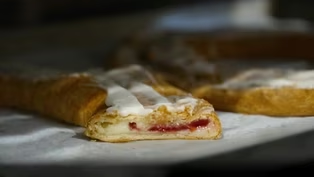
Preview: O&H Danish Bakery, Charlie's Smokehouse
Preview: S16 Ep13 | 15s | Luke and Kurt Fogle go behind the counter at Racine's O&H Danish Bakery to make kringle. (15s)
Providing Support for PBS.org
Learn Moreabout PBS online sponsorship

- Food
Christopher Kimball’s Milk Street Television
Transform home cooking with the editors of Christopher Kimball’s Milk Street Magazine.









Support for PBS provided by:
Wisconsin Foodie is a local public television program presented by PBS Wisconsin